
Breast Implant Revision
Conveniently located to serve the areas of Denver, CO
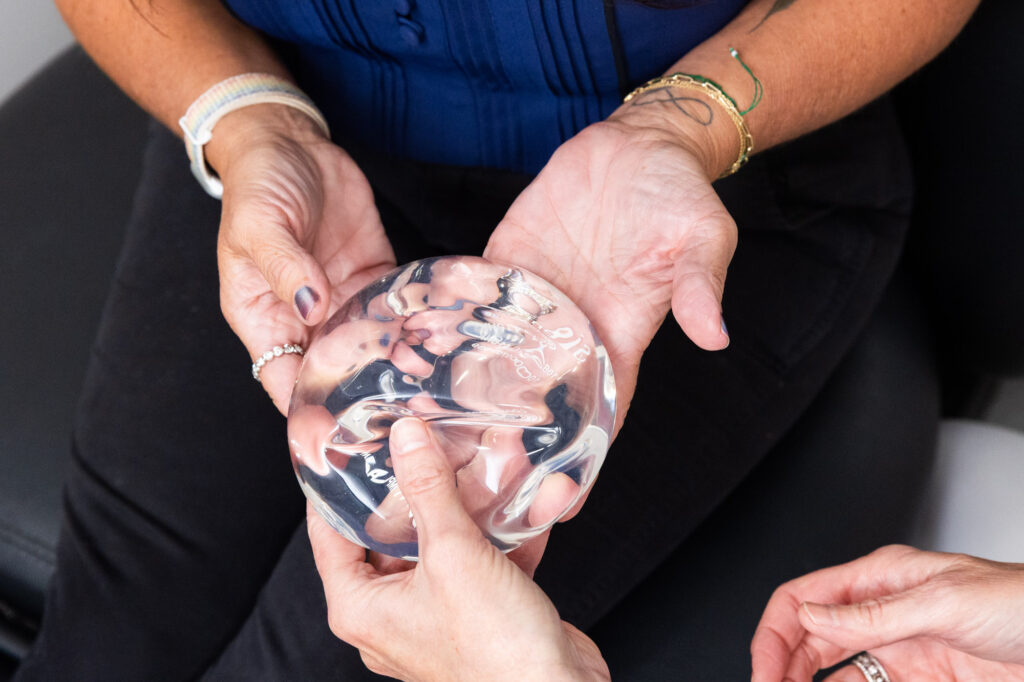
A breast implant exchange is a surgery that will swap out existing implants for new models. Because saline and silicone devices both possess finite lifespans, they generally require replacement every 10 to 20 years. Unlike a breast revision, which addresses medical issues or aesthetic shifts, the primary indication for an exchange is to replace devices that have reached the end of their useful life.
Board-certified plastic surgeon Dr. Lisa Hunsicker provides compassionate, individualized care at Revalla in Colorado. By working closely with every patient to prioritize their unique goals, she achieves truly transformative results.
To explore your options for breast implant exchange, submit our online contact form or call Revalla’s Littleton, CO office at (720) 283-2500.
Contents
- 1 Before and After Photos
- 2 About Breast Implant Exchange
- 3 Benefits
- 4 Candidates
- 5 Personal Consultation
- 6 Preparation
- 7 Procedure
- 8 Recovery
- 9 Results
- 10 Breast Implant Rupture Screening Recommendations
- 11 Breast Implant-Associated Analplastic Large Cell Lymphoma
- 12 FDA Box Warning for Breast Implants
- 13 Cost of Breast Implant Exchange in Denver
- 14 FAQ
- 15 References
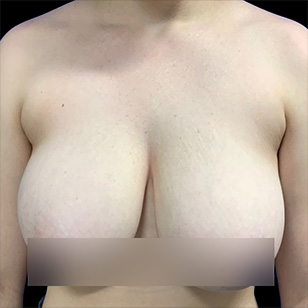
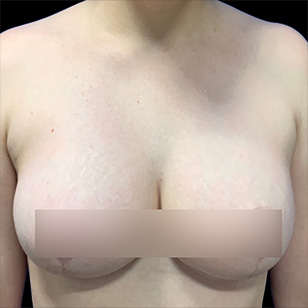
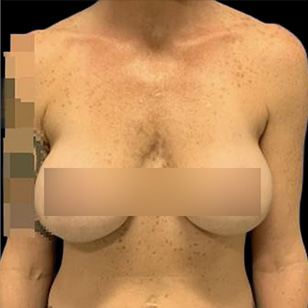
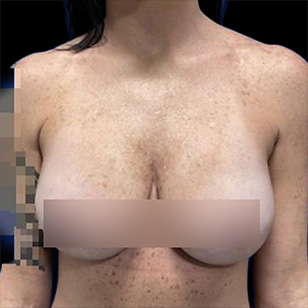
Before and After Photos


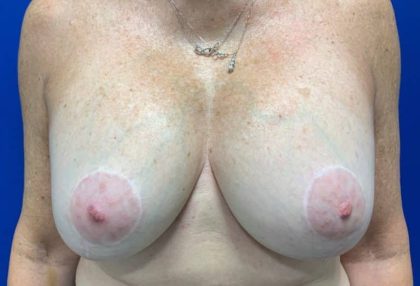
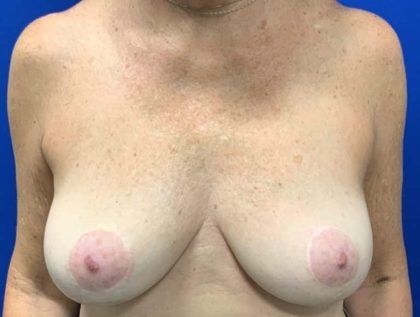
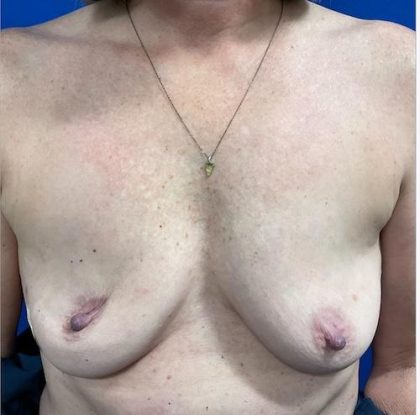
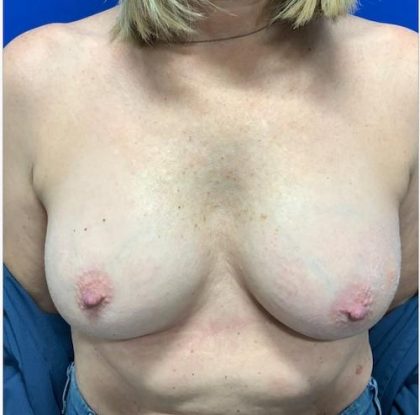
About Breast Implant Exchange
While modern breast implants are extremely durable, they are not lifetime devices. Most manufacturers and surgeons recommend replacing implants every 10 to 20 years or as needed to maintain optimal safety and aesthetic results. Over time, the structural integrity of the implant shell may diminish, increasing the risk of rupture in silicone devices or deflation in saline implants. (1) Additionally, a patient’s body naturally changes due to aging, weight fluctuations, and pregnancy, which can alter how the original implants sit and look. Some patients choose to upgrade their implants during exchange to newer, more advanced technologies that offer a more natural feel or different profile. (2)
Reasons for Breast Implant Exchange
Beyond simple device lifespan, the decision to exchange implants can also stem from a desire for a different look or the need to resolve physical symptoms. For instance, some patients find that their aesthetic preferences have shifted from a dramatic look to a more subtle, natural appearance, or vice versa. Others may experience capsular contracture, where the body forms a tight layer of scar tissue around the implant, causing it to feel firm or look distorted. By removing the old device and the scar tissue, a soft, natural contour can be restored as well as alleviate any associated discomfort.
Benefits
A breast implant exchange offers a range of aesthetic and functional benefits. Primary among these is the incorporation of updated technology, as newer implants are more cohesive and resistant to complications. For patients experiencing medical issues, the exchange provides a resolution to concerns like implant rupture or capsular contracture, ensuring long-term health and comfort. Aesthetically speaking, a breast implant exchange has the ability to revitalize the chest appearance, improving symmetry and fullness that may have been lost over time. Patients often report a significant boost in self-confidence when their physical appearance more closely aligns with their current lifestyle and body goals.
Candidates
Potential candidates who wish to undergo a breast implant exchange should be nonsmokers (or willing to quit for an extended period), in overall good health, and have realistic expectations about surgery. This includes individuals whose implants are nearing the end of their lifespan, those experiencing physical discomfort or visible changes in implant position, or those who simply desire an upgrade in implant technology. During your consultation, Dr. Hunsicker will ensure that you are medically cleared to proceed with surgery.
Personal Consultation
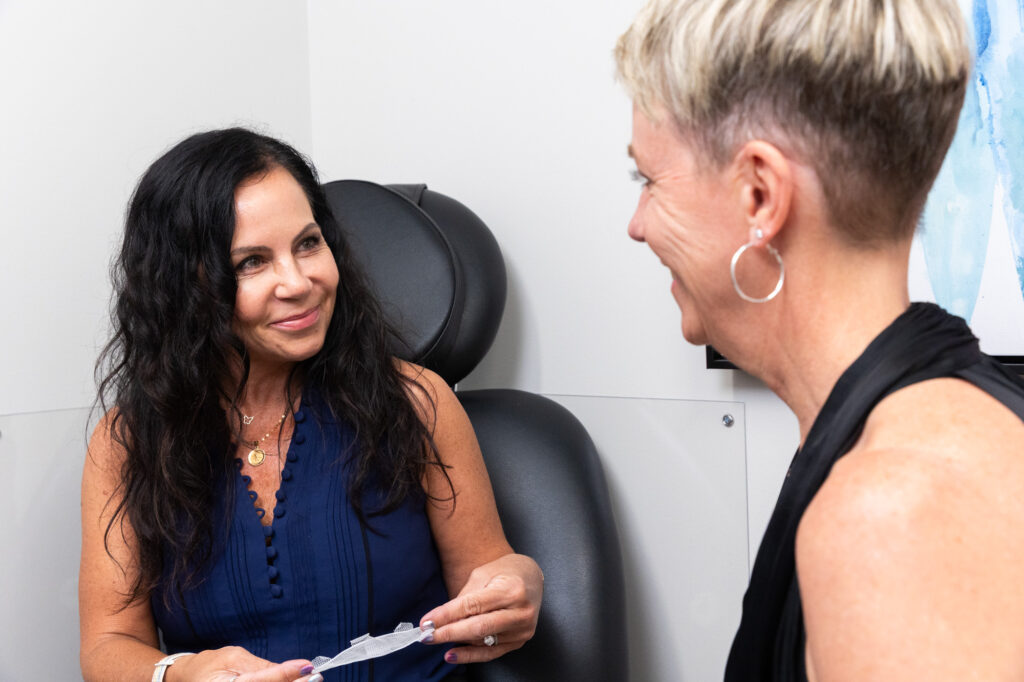
During this one-on-one meeting with Dr. Hunsicker, she will evaluate the present state of your implants and breast tissue, checking for signs of rupture, sagging, shifting, and scar tissue buildup. She will review your medical history, including previous surgeries, and record any implant-related symptoms you may be experiencing. This is also the time to discuss your aesthetic goals for the exchange procedure, especially if you wish to alter the size or profile of your breasts. With all of this information, Dr. Hunsicker will create your personalized treatment plan to proceed with your breast implant exchange.
If you are ready to begin planning your restoration, call the Revalla offices at (720) 283-2500 or submit our online contact form.
Preparation
As with all surgical procedures, there are necessary preparations you must make to optimize your procedure and recovery. Dr. Hunsicker will provide you with more detailed information, but general guidance includes:
- Complete all necessary lab tests and medical imaging to confirm placement and structural integrity of your current implants.
- Avoid nicotine, alcohol, and blood-thinning medications or supplements in the weeks before and after surgery.
- Schedule time off from social and professional commitments.
- Prepare a comfortable, well-stocked recovery space, including all necessary filled prescriptions.
- Recruit a trusted adult to transport and assist you on the day of surgery and first 24-48 hours of initial recovery.
Procedure
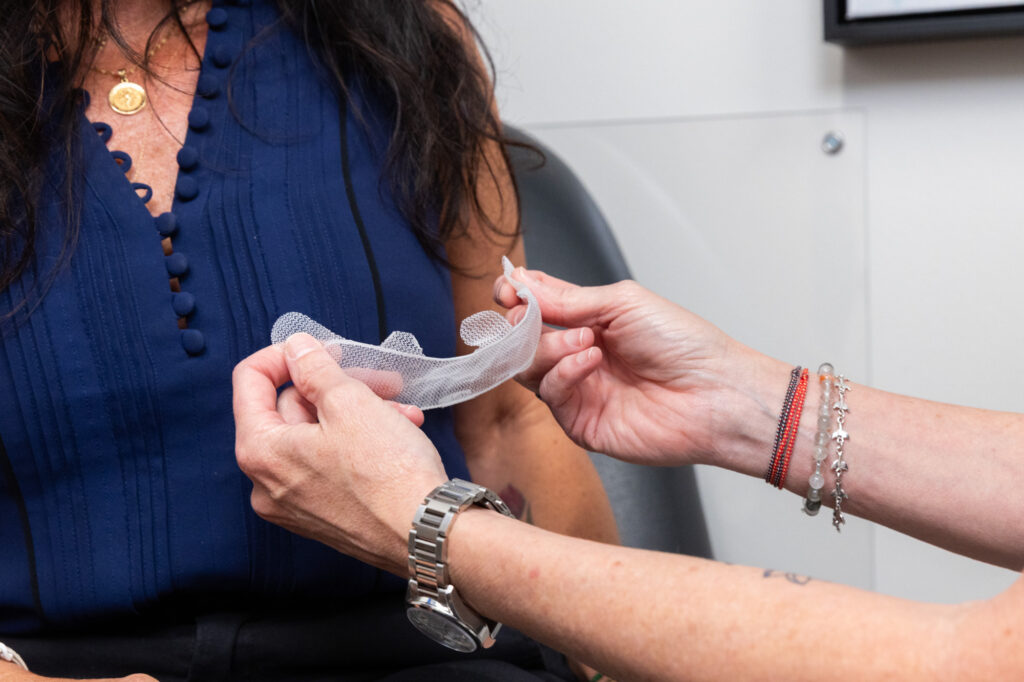
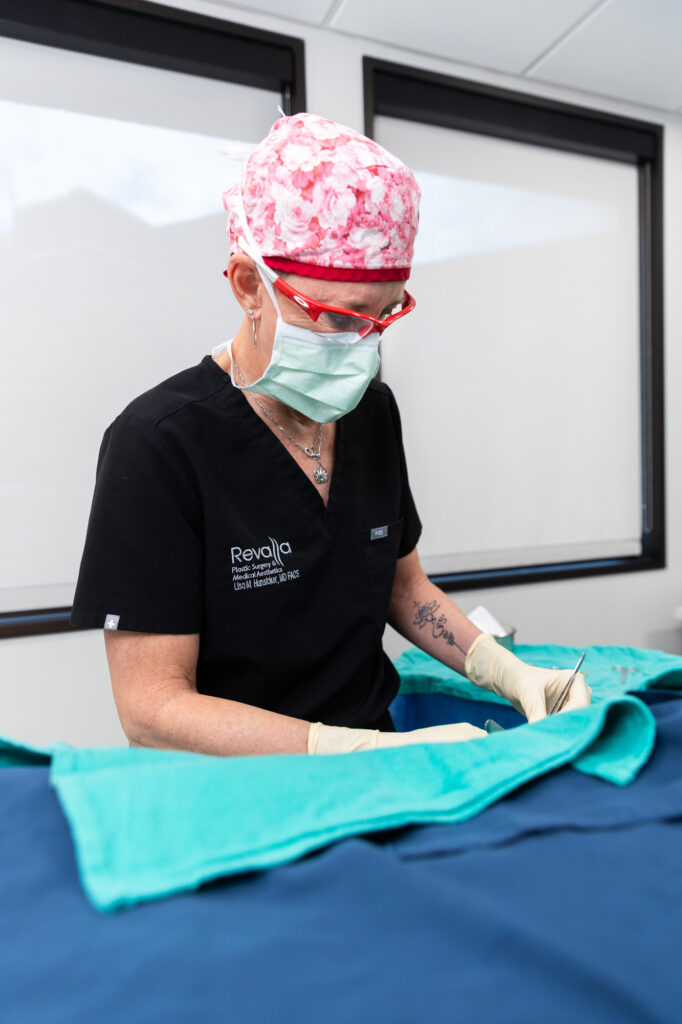
Dr. Hunsicker performs each breast implant exchange surgery as an outpatient procedure that typically takes 1 to 4 hours, depending on the complexity. You will receive general anesthesia to keep you comfortable. To minimize new scarring, Dr. Hunsicker often utilizes the incision sites from your original augmentation, carefully reopening them to access the implant pocket. Once she has access, she removes the old implants. If capsular contracture is present, she will perform a capsulectomy to remove the thickened scar tissue, which she may send a sample of to a pathology lab for deeper health insights.
She will then assess the breast pocket, making any necessary adjustments to ensure that the new implants sit correctly and symmetrically. After she securely places the new devices, she will meticulously re-close the incisions with fine sutures to encourage clean healing and natural-looking results.
Recovery
Recovery from an exchange is often more efficient and less intense than the initial augmentation, as the breast tissues have already been adjusted to accommodate implants. Where this may differ is when Dr. Hunsicker has to perform a capsulectomy. In the first few days, patients typically experience some soreness, swelling, and bruising, which is manageable with prescription medication, rest, and a supportive compression bra.
Most individuals are able to return to desk work within one week, and Dr. Hunsicker encourages light walking to promote healthy blood flow and prevent blood clots in your legs after surgery. However, you must avoid heavy lifting, strenuous exercise, and any high-impact activities for at least 4 to 6 weeks or until Dr. Hunsicker provides clearance. Be sure to attend all follow-up appointments and follow Dr. Hunsicker’s post-operative guidelines to support a safe and optimal healing process.
Results
The final results of your breast implant exchange will fully emerge as swelling subsides over several months. Your updated implants should display their desired size and shape, with improved symmetry and a refreshed contour. Thanks to Dr. Hunsicker’s commitment to personalized care and surgical excellence, the results of your surgery are intended to be beautifully natural-looking and provide you many years of satisfaction and confidence. We encourage you to schedule regular follow-up appointments to monitor your breast health and ensure the continued integrity of the new implants.
Breast Implant Rupture Screening Recommendations
“It is recommended that you have periodic imaging (e.g., MRI, ultrasound) of your silicone gel-filled breast implants to screen for implant rupture regardless of whether your implants are for cosmetic augmentation or reconstruction. These recommendations do not replace other
additional imaging that may be required depending on your medical history or circumstances
(i.e., screening mammography for breast cancer).
Even if you have no symptoms, you should have your first ultrasound or MRI at 5 years after your initial implant surgery and then every 2-3 years thereafter. If you have symptoms at any time or uncertain ultrasound results for breast implant rupture, an MRI is recommended.” (3)
Breast Implant-Associated Analplastic Large Cell Lymphoma
Breast implant-associated anaplastic large cell lymphoma (BIA-ALCL) is a rare type of non-Hodgkin lymphoma that can develop in the scar tissue or fluid surrounding a breast implant.
It is not breast cancer, but rather a cancer of the immune system. The risk is considered low overall, but rates have been higher in patients who receive textured-surface implants rather than smooth-surface implants.
Common BIA-ALCL symptoms include persistent swelling, a lump or mass, pain, or changes in the breast, often occurring several years after the patient initially received implants.
In an evaluation, Dr. Hunsicker may physically examine the breasts, order imaging such as ultrasound, and test fluid or tissue around the implant for abnormal cells.
When BIA-ALCL is diagnosed, Dr. Hunsicker generally recommends that patients remove the implant and surrounding scar capsule. If necessary, patients may also undergo chemotherapy or radiation, depending on how far the disease has spread.
FDA Box Warning for Breast Implants
- Breast Implants are not considered lifetime devices;
- The chance of developing complications increases over time;
- Some complications will require more surgery;
- Breast implants have been associated with the development of 3 types of cancer: breast implant-associated anaplastic large cell lymphoma (BIA-ALCL), breast implant-associated squamous cell carcinoma (BIA-SCC) and is very rare, and breast implant associated B cell lymphoma (BIA-BCCL) and also is very rare;
- BIA-ALCL occurs in patients with textured breast implants, and deaths have occurred from BIA-ALCL, and BIA-SCC;
- Breast implants have been associated with systemic symptoms. (3)
Cost of Breast Implant Exchange in Denver
The cost of a breast implant exchange surgery is highly individualized and depends on a few factors, including the complexity of the surgery (e.g. if a capsulectomy is required), anesthesia requirements, and the new implant type. After finalizing your treatment plan, Dr. Hunsicker will provide you with a comprehensive cost breakdown that reflects the details of your unique surgery.
When you are ready to start planning your breast implant exchange, contact Revalla online or call our Littleton office at (720) 283-2500.
FAQ
How long does a breast implant exchange surgery take?
The surgical procedure typically takes between one and four hours, depending on the complexity of the removal and the extent of any necessary pocket adjustments.
What are the risks associated with a breast implant exchange?
As with any surgery, risks include infection, reaction to anesthesia, and hematoma. Specific to implants, there is a small risk of future capsular contracture or dissatisfaction with the aesthetic outcome.
Will I have new scars after a breast implant exchange?
By utilizing existing scars from the original augmentation, Dr. Hunsicker strives to ensure that no significant new scarring is created during the exchange.
How long is the recovery period?
Most patients return to light activities and work within a week, though full physical recovery for strenuous exercise takes about 4 to 6 weeks.
References
- Gossman W, Shikhman R, Moufarrege R. Breast Implant Rupture. Nih.gov. Published November 11, 2019. https://www.ncbi.nlm.nih.gov/books/NBK459308/
- Denney BD, Cohn AB, Bosworth JW, Kumbla PA. Revision Breast Augmentation. Seminars in Plastic Surgery. 2021;35(02):098-109. https://doi.org/10.1055/s-0041-1727272
- Contains Nonbinding Recommendations Draft -Not for Implementation Breast Implants -Certain Labeling. http://www.fda.gov/media/131885/download